|
OSTIA ARCHAEOLOGICAL NEWS |
| Archaeological news about Ostia and its territory. |
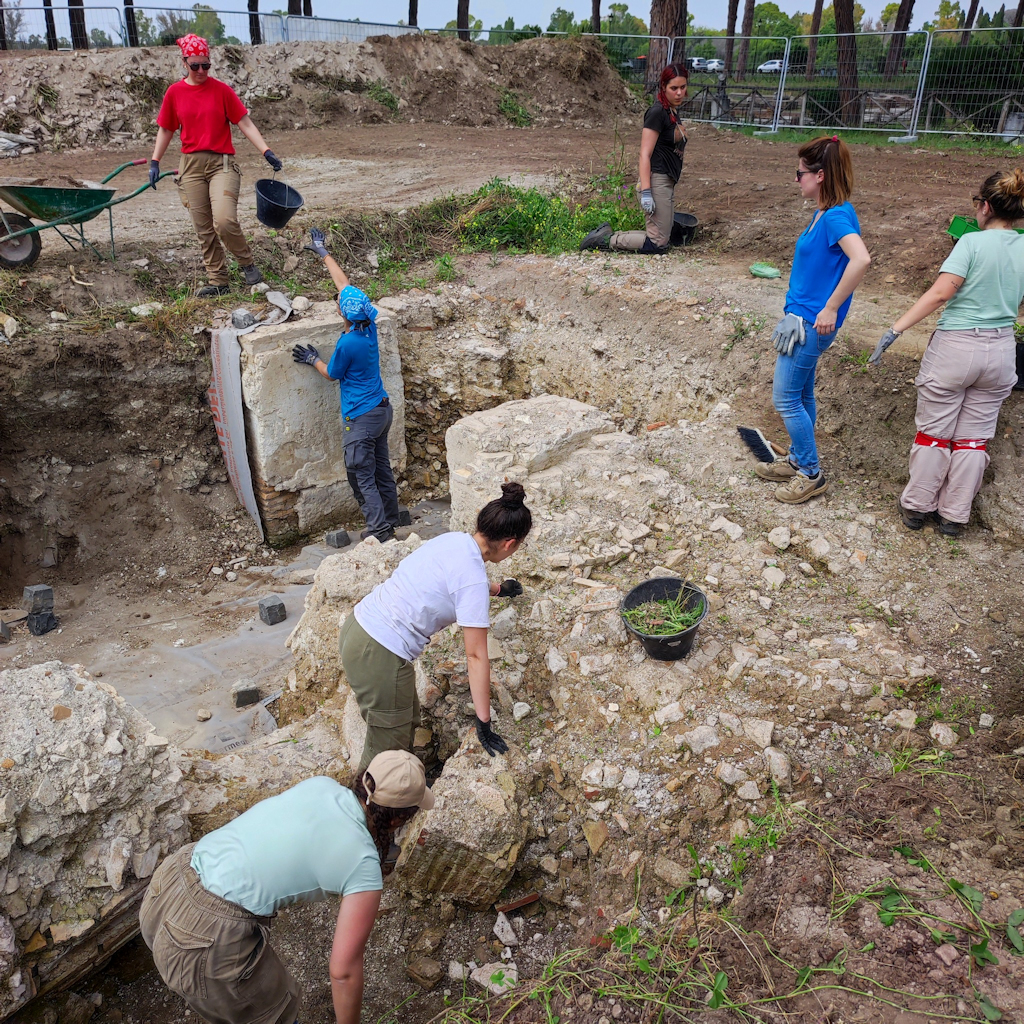
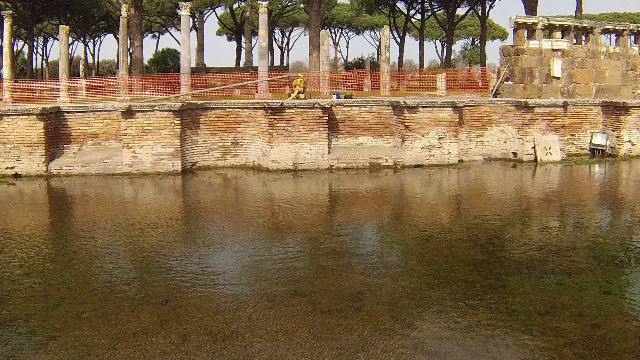
23 May 2024 - New excavationsA new campaign of excavations has started next to the Square of the Corporations, behind the theatre, and on the Forum of the Marine Gate, in the south-west part of the city.
Photo: Parco Archeologico di Ostia Antica.
27 June 2023 - Discovery of a new fragment of a calendar and a journey by HadrianIn Newsweek Robyn White reports:
The "secret" journeys of Emperor Hadrian have been discovered on a white marble slab in an ancient Roman city. The white marble, found in the Ostia Antica archeological park, southwest of Rome, details the dates of the ancient Roman emperor's journeys between Greece and Africa, Il Messaggero reported. Hadrian, who ruled from 117 to 138, is best known for creating Hadrian's Wall, and being one of the "Five Good Emperors," who ruled during a period of prosperity for the Roman Empire. The engravings in the white marble are from 128 A.D. and describe Hadrian's movements in detail. The fragments - found in the Forum of Porta Marina area of the archeological site, which lies just outside the ancient city gate - are from the Fasti Ostienses. This was a calendar of Roman magistrates and several significant events that took place between 49 B.C. to 175 A.D. For this reason, the engravings hold valuable clues into this time.
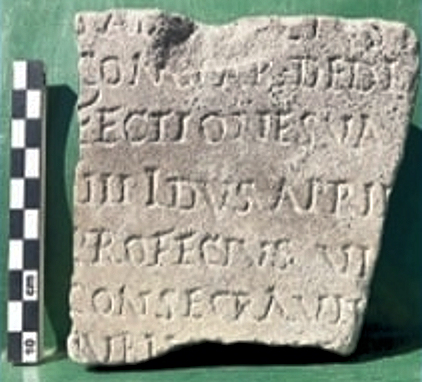
Director of Ostia Antica, Alessandro D'Alessio, told Newsweek that the engravings are "extraordinary." "From a purely scientific point of view, the discovery of this epigraphic fragment is extraordinary, as it gives us in a few lines, or rather parts of a few lines, such a quantity of information and details about Hadrian's reign and activity that we did not have before." D'Alessio said that from this finding, it is known that in 128 A.D., the emperor assumed the honorary title of pater patriae, which translates as "father of the people." To celebrate this, the engravings show that he gave money to his subjects, the news outlet reported. It is also noted that the emperor left for Africa on April 10 the same year. He returned to Rome in July before leaving for Athens, Greece, in August. It is thought that between these journeys, the emperor consecrated a temple, although it is not clear which one. "Before leaving for Athens, Hadrian consecrated something, evidently a temple, in Rome," D'Alessio said. "The discourse to be made here would be very long and complex. I will limit myself to saying that there are basically two possibilities: the Pantheon or, more likely in our opinion - I am studying the inscription with my colleague Dr. Filippo Marini Recchia - and at the present stage of our research, a temple that did not already exist."
These most recent findings were made as part of the research project, Ostia Post Scriptum. The finding was made back in September 2022, when excavations began. The primary focus of the project was to excavate a sector of the city that has never been investigated before.
19 February 2022 - Discovery of a new mithraeumA new mithraeum has been discovered during further excavations in the Domus dei Capitelli di Stucco. Part of a stucco relief of Mithras was found. The early reports say: "The interpretation of this stucco relief as a representation of the god Mithras in the act of sacrificing the bull was supported by the continuation of the excavation which, in addition to producing numerous other stucco fragments, led to the identification of the room in which it was found as a mithraeum".
Further information:
- News report by TGR Lazio.
- News report by Canale 10.
17 October 2021 - The Museo delle Navi has reopenedAfter many years of closure the Museo delle Navi (Museum of the Ships), near the airport, has reopened.
Further information:
- Museum of the Roman ships from Fiumicino.
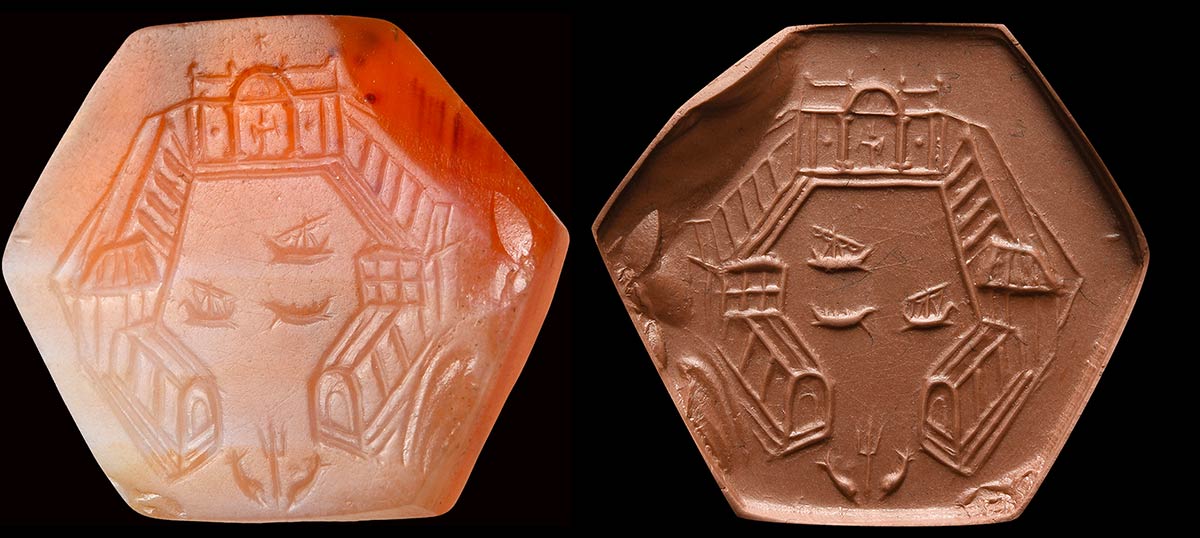
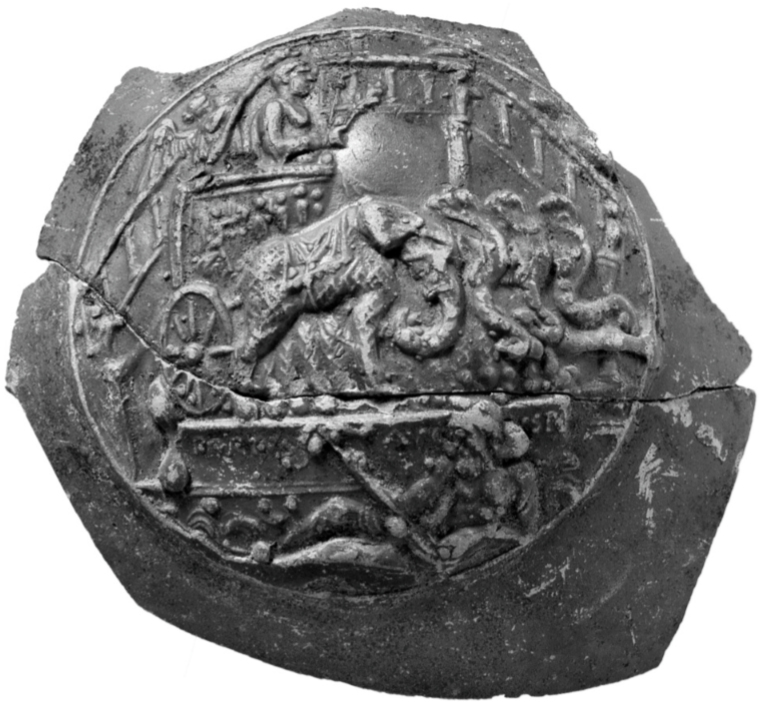
7 June 2020 - Two new ancient depictions of the hexagonal harbour basin of Trajan in PortusTwo new ancient depictions of the hexagonal harbour basin of Trajan in Portus have emerged. One is on an intaglio that was on the art market. It also shows the colossal statue of the cuirassed Trajan. The other is a relief on an earthenware vessel found in Lyon. It shows the elephant quadriga that can also be seen on the Torlonia relief.
Further information:
- The Temple of Liber Pater in Portus.
- The quadriga of elephants in Portus.
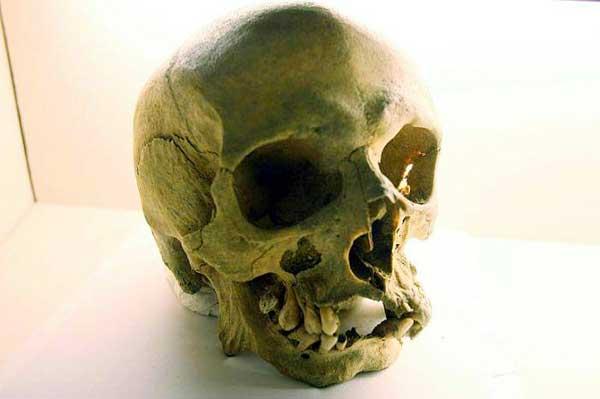
17 May 2020 - Rome unearths ancient Roman sarcophagus at Ostia AnticaAn intact terracotta sarcophagus dating from the second century AD has been unearthed in Ostia. Based on studies of the skull and pelvis, the archaeologists have determined that the deceased was a male who died at around the age of 40. They also carried out dental analysis on the man who had lost a total of 19 teeth by the time of his death. Archaeologists believe that the man was of "simple, humble social character". The Parco Archeologico di Ostia published a web page about the discovery.
Source: wantedinrome.com.
11 February 2019 - Restoration of the Baths of ButicosusOn this day a major restoration of the Baths of Buticosus started. This bathing building owes its name to a character represented on the mosaic floor, Epictetus Buticosus, depicted naked and interpreted as the caretaker. The mosaic of Buticosus is not the only one present in the bathhouse: the floor of the caldarium (hot bath) has a mosaic with marine scenes, while the walls of some rooms still have original decorations (paintings and marble). Access to the Baths of Buticosus is banned to the public for the duration of the restoration work.
Source: Parco Archeologico di Ostia.
28 December 2018 - Restoration of the Terme di MatidiaIn 2019 restoration will begin of the Baths of Matidia on the Isola Sacra, on the left bank of the Fossa Traiana, near Portus. The primary task is to liberate the ruins from vegetation. The work will be carried out by the association LaboraStoria,
Source: Il Messagero; Fiumicino Online (movie).
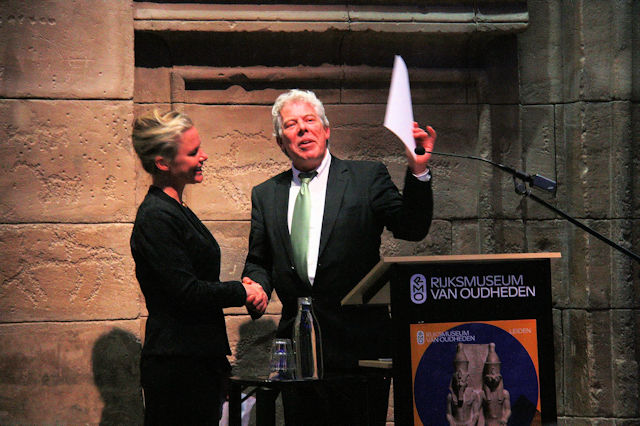
4 December 2018 - Mary Jane Cuyler wins prestigious awardMary Jane Cuyler (one of the moderators of the Ostia Facebook group) was given the BABESCH BYVANCK AWARD 2018 for her paper 'Legend and Archaeology at Ostia: P. Lucilius Gamala and the Quattro Tempietti'. The ceremony took place in the courtyard of the Museum of Antiquities in Leiden, The Netherlands. She was introduced by Demetrius Waarsenburg, chairman of the board of the BABESCH Foundation.
Source: BABesch.
Photo: Rogier Kalkers.
7 May 2017 - VandalismA vandalised and decapitalised small statue was found near the station.
Source: Il Faro.
13 October 2016 - Controversy about a bridge - the Ponte della ScafaThe Ponte della Scafa is a modern bridge over the Tiber, to the west of Ostia Antica. It is used by commuters going to the airport area (Leonardo da Vinci / Fiumicino) and a bottleneck. Therefore plans have been designed for a new bridge. Unfortunately this new bridge would rest on important archaeological remains; the fenced in and protected area of Ostia Antica is smaller than the actual ancient city. The archaeological superintendency has now blocked the construction of this new bridge (which will not have been easy, because dealing with million euro investments, and obviously frustrating for the commuters).
Source: Fregene Online.
15 August 2015 - News statement about the pediment-decoration of the Temple of Rome and AugustusThe Ostia Forum Project has released a news statement about the pediment-decoration of the Temple of Rome and Augustus on the south side of the Forum.
12 April 2015 - New pediment-decoration of the Temple of Rome and Augustus identifiedThe Ostia Forum Project has found an important marble deposit from the fifth century. It consists of fragments of marble from past centuries, to be reused. Some of the fragments belong to the pediment-decoration of the Temple of Rome and Augustus on the south side of the Forum.
Source: Ostia Forum Project.
21 April 2014 - The city wall of Ostia to the north of the Tiber?For a long time we have known that there were many buildings on the north side of the Tiber, in the "Ostian Trastevere". The remains in the east part were published in 1960 (Bertacchi) and 1995 (Pellegrino-Olivanti-Panariti). Those in the west part were gathered on a map by Michael Heinzelmann in 2003. Archaeologists now claim to have seen - with the help of geophysical research - that the city wall of Ostia, built in the first century BC by Cicero and Clodius, continued here. The claim has not yet been confirmed by excavations.
Source: Portus Project.
10 March 2014 - Valnea Santa Maria Scrinari has passed awayIn February 2010 Valnea Santa Maria Scrinari, former Soprintendente of Ostia Antica, has passed away at the age of 87.
Source: Il Piccolo.
2 March 2014 - Geoffrey Rickman has passed awayOn 8 February 2010 Geoffrey Rickman has passed away.
- Obituaries:
- Papers of the British School at Rome.
- The Royal Society of Edinburgh.
- Biographical Memoirs of Fellows of the British Academy.
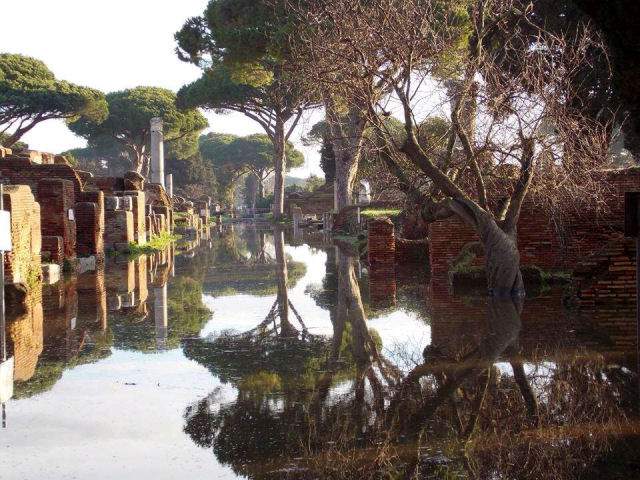
2 March 2014 - Excessive rainOn January 31 2014 an excessive amount of rain fell in Ostia Antica. Two weeks later there was still 20 centimetres of water on some streets.
The Decumanus seen from the west, from the Bivio del Castrum. To the left is the Curia, to the right the Basilica.
Photo: Max Victor David (c. 14 February 2014).
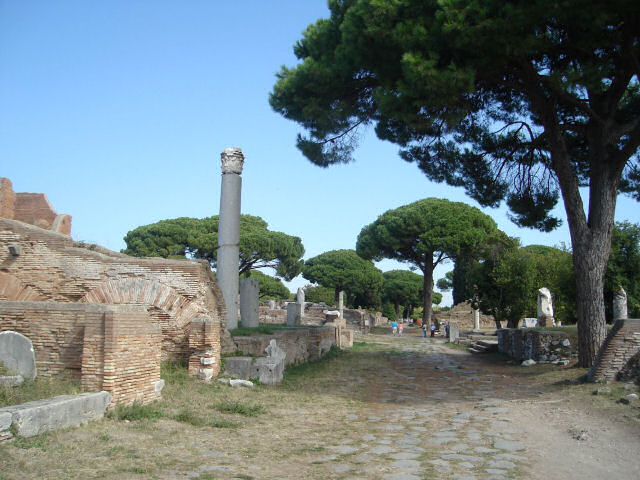
The same stretch of the Decumanus under normal circumstances.
The interior of the theatre (14 February 2014).Source: Corriere della Sera.
9 November 2013 - Lidia Paroli has passed awayIn June 2013 Lidia Paroli has passed away.
Source: ArcheologiaMedievale.it.
19 July 2013 - Discovery of a mausoleum and a domusIn the Parco dei Ravennati in medieval Ostia a Roman mausoleum and domus have been discovered.
Source: American Institute for Roman Culture, press conference, 19 July 2013; video (AIRC); video (RomaUno TV).
26 November 2011 - The lighthouse of Claudius in Portus has been foundSource: Cinzia Morelli - Alfredo Marinucci - Antonia Arnoldus-Huyzendveld, "Porto di Claudio: nuove scoperte", in "Portus and its hinterland: recent archaeological research" (edited by Simon Keay and Lidia Paroli), London 2011, 47-65. This book has appeared recently, but cannot be bought yet. It will be distributed by Oxbow Books.
In the years 2001-2007 the Soprintendenza has done a lot of work in the west part of the harbour of Claudius, necessitated by building activity in Fiumicino and at the airport Leonardo da Vinci. The work consisted of both excavations and drillings. This research has led to the localization of the western part of the two moles of the harbour and of the lighthouse-island. The moles and the island are depicted on several drawings and paintings from the fifteenth century. Reconstructions in the nineteenth century are much different. For example: the lighthouse is no longer on an island, but on a mole. In the sixteenth and seventeenth century remains could still be seen in the sea. In the nineteenth century they were covered by earth, because the coastline kept moving to the west. Modern research seems to have been based on a description by Pliny the Elder, neglecting the actual remains. In 1963 Castagnoli returned to the older reconstructions, on the basis of aerial photos. He was followed by Giuliani. Again the harbour was thought to have had two moles with a lighthouse-island in between. The discussion about the entrances of the harbour was continued recently by Giraudi and Goiran, on the basis of drillings.
Through the drillings remains were found of the western end of the southern and northern mole, and of the lighthouse-island, with passages to the north and south. The remains are beyond Viale di Coccia di Morto, much further to the west than had ever been expected. The remains (tufa, basalt, bricks, sherds) are at a great depth (-3 to -15.5 metres). The size of the basin was more than 200 hectares. The northern mole was 1.600 metres long, the southern one c. 1.320. The island was not between the end of the two moles, but a little further to the west.
Plan with the two moles and the location of the lighthouse (Morelli - Marinucci - Arnoldus-Huyzendveld 2011, fig. 4.10).
Lighthouse.kmz for Google Earth (Antonia Arnoldus-Huyzendveld).
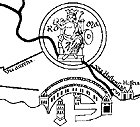
The drillings compared with an old fresco (Antonia Arnoldus-Huyzendveld).
The location of the lighthouse-island (photo 2007, Jan Theo Bakker).
The location of the lighthouse-island (photo 2007, Jan Theo Bakker).
Building activity on the passage to the south of the lighthouse-island (photo 2007, Jan Theo Bakker).
More about the lighthouse is on our website, look here.
12 November 2011 - Discovery of another ship and a moleA follow-up on the news of 30 April 2011: a second ship and a mole have been found. There are speculations in the media that the new bridge will have to be built at another location.
Sources: Il Faro Online, 3 November 2011; Il Messaggero, 5 November 2011.
21 September 2011 - A major discovery in PortusA huge building has been discovered at Portus, used for naval purposes.
Source: YouTube, 21 September 2011.
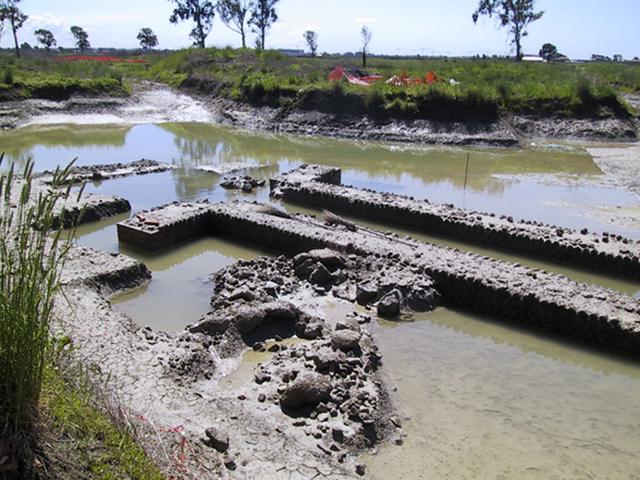
30 April 2011 - Ship found near Tor BoaccianaA few weeks ago, a wooden ship of the Roman age was discovered at a depth of almost four meters, during a rescue dig at the site of one of the pillars for the new bridge of the Via della Scafa near Ostia Antica. The absence of nails or iron structures has dated the ship to the Imperial age. It is the first Roman ship ever to be found near Ostia.
Archaeologists so far have uncovered an 11 meter section of one side of the ship. Its total length could be about 13 meters, which is about the size of the vessels Fiumicino 1 and 2 of the Museo delle Navi di Fiumicino, discovered in the sixties of the last century. The new site is located near the Tiber and along the former coast directly to the north of Tor Boacciana. The ship has been preserved by the mud in which it is embedded and thanks to the high groundwater table. Its state of conservation is excellent.
The 28th of April the Italian Minister of Culture has visited the site, and the new find was presented to the press. Anna Maria Moretti, archaeological Superintendent for Rome and Ostia, said restoring the ship "will be an extremely delicate operation". "We're keeping it constantly covered in water so that the wood doesn't dry out", she said. "The wreck must be treated with highly sophisticated preservation techniques".
The excavations will continue under the supervision of Paola Germoni of the Superintendency of Rome and Ostia and the archaeologist Alessandra Ghelli. Various specialists are involved in the preservation of the vessel and the study of the site.
Source: Corriere della Sera, 28 April 2011.
14 April 2011 - Various discoveries near the Ponte della ScafaVarious discoveries have been made near the Ponte della Scafa ("Skiff Bridge"), a bridge that crosses the Tiber to the northwest of the excavations. Work has started on a new bridge to replace the present one. Walls were found on the Isola Sacra and on the Ostian side, near Tor Boacciana. There are fears that all will be destroyed for the new road system.
Sources: Associazione Culturale 'Severiana'; Il Faro on line, 2 April 2011, 22 March 2011; L'Unico, 15 March 2011; www.roma2013.org, 21 February 2011.
1 April 2011 - Three individuals arrested for illegal excavationsThe Carabinieri, supported by a helicopter, have arrested three individuals performing illegal searches for archeological material.
Source: La Repubblica, 1 April 2011
11 July 2010 - Discovery of a very wide channel on the Isola SacraThe Portus Project claims the discovery of a very wide channel (90 metres) on the Isola Sacra, between Ostia and Portus. It was found with geophysical instruments. It is interpreted as a second waterway between Ostia and Portus, to the west of the Tiber. There seems to have been an island in the middle of it, and there was a bridge that crossed it.
Source: The Daily Telepgraph, 11 July 2010.
1 May 2010 - Discovery of tombsIn April a few remains of tombs were discovered in the modern village Ostia Antica, during maintenance work. The place of discovery is the Parco dei Ravennati, near Via Gesualdo, to the east of the mediaeval Borgo. The masonry structures may belong to the second half of the first century AD. Remains of both inhumation and cremation were found. Of particular importance is the study of the skeletons. The deceased, mostly men, appear to have belonged to a very low social level, in view of the many signs of skeletal disorders caused by biomechanical stress, attributed to particularly heavy employment.
Sources: RomaNotizie, 23 April 2010; Il Messaggero, 23 April 2010; Il Tempo, 24 April 2010.
1 January 2010 - The Soprintendenza is no moreThe Soprintendenza di Ostia Antica has ceased to exist. It has been merged with the Soprintendenza of Rome. You can still read our (outdated) page about the situation before October 2009.
4 October 2009 - An amphitheatre in PortusIn Portus a small amphitheatre has been found. For more information see the Portus Project.
7 May 2009 - A new special commissioner for Rome and OstiaGuido Bertolaso resigned on 30 April 2009 as special commissioner for Rome and Ostia, so that his office of Civil Protection in Italy can focus on the critical earthquake recovery efforts in the Abruzzo Region. He was replaced with the Italian architect Roberto Cecchi, who is also Italy's current Direttore generale per i Beni Architettonici, Storico Artistici ed Etnoantropologici.
Source: La Repubblica, 6 May 2009.
21 March 2009 - Special commissioner for Rome and OstiaThe Italian government has appointed a special commissioner for Rome and Ostia. His name is Guido Bertolaso. In the past he handled the Naples garbage crisis. His term expires on 31 December 2009. According to the government there is an emergency situation. Some ancient monuments seriously need repairs, especially after heavy rains this winter. The government also approved 37 million euro in funding to restore monuments.
Some people hope that a special commissioner will be able to push through bureaucratic hurdles and get more work done. Many archaeologists and arts administrators see more ominous designs behind the provision. They fear it will lead to the gradual dismantling of a century-old system of state-run conservation, allowing private investors to gain a stake in some of the most lucrative tourist sites in Italy.
The Culture Ministry said that Mario Corsini, the Rome city councilman in charge of urban development, would work alongside Mr. Bertolaso. That caused speculation that the government is primarily interested in construction projects that generate jobs and revenue, and not in the protection of ruins. "In moments of economic crisis perhaps one wants to have a free hand in the Roman countryside", Adriano La Regina, the former chief of Rome's archaeological heritage, said dryly in an interview last month in the newspaper La Repubblica.
Sources: The New York Times, 11 March 2009; The Boston Globe, 18 March 2009.
20 September 2008 - The Casa delle Ierodule open to the publicAfter decades of restoration work the Casa delle Ierodule (House of the Priestesses), in the west part of the Garden Houses, will be open to the public. It is now referred to as the Casa di Lucceia Primitiva, after a name found in a graffito. Other buildings in the block will also be opened to the public for the first time (Casa delle Muse, Casa delle Pareti Gialle and Casa delle Volte Dipinte). The buildings are especially important because of the paintings. They will be open for the first time on September 27.
A related presentation will be given by Anna Maria Moretti, Soprintendente per i Beni Archeologici di Ostia, and Angelo Pellegrino, director of the excavations, on September 26 at 11.00. They will present the book "Casa di Lucceia Primitiva e il complesso degli apparati decorativi di Case a Giardino".
Source: Adnkronos, 19 September 2008; www.ilvelino.it, 19 September 2008.
12 September 2008 - Excavations on the Forum of the Heroic StatueIn September 2008 excavations are taking place on the Forum of the Heroic Statue, directed by Axel Gering (Humboldt University in Berlin) and Luke Lavan (University of Kent). The progress can be followed in their blog.
28 August 2008 - Enlargement of the modern cemeteryIt looks as if the modern cemetery of Ostia will be enlarged substantially, with space for 10.000 urns. This cemetery is to the south of the mediaeval village, near the church of San Ercolano. The Superintendency had for a long time opposed the plan. The work will however take place after discussions with the Superintendency starting in September. Trial trenches led to the discovery of a church from the 15th century. The area belongs to the prince Aldobrandini, who will donate it to Ostia.
Source: www.online-news.it/ostiaintasca/, 28 August 2008.
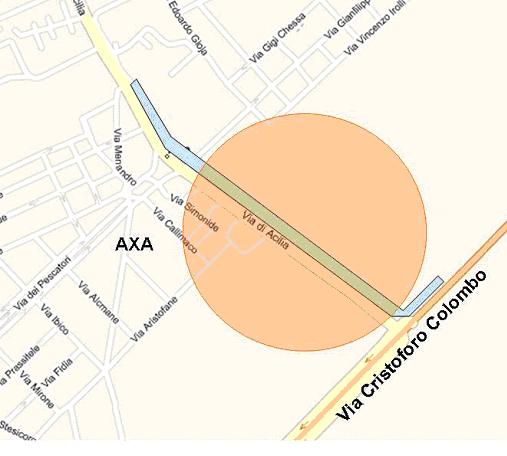
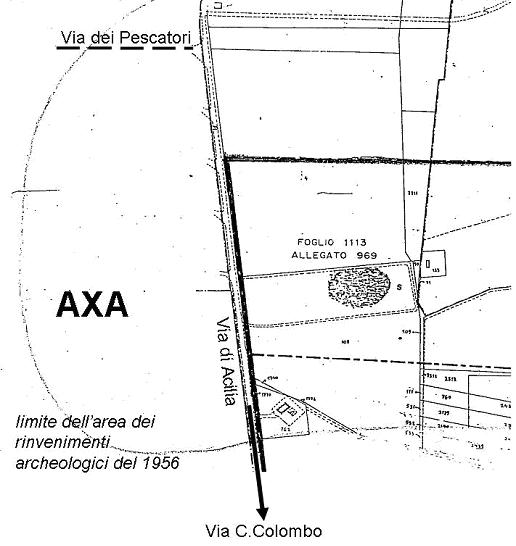
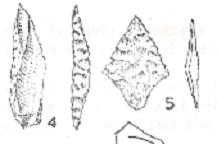
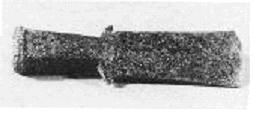
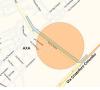
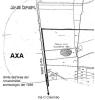
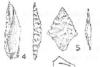
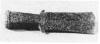
4 July 2008 - Prehistoric remains in dangerAbout seven kilometres to the north-east of Ostia, near Acilia, is a district that has the curious name Axa. It is derived from ACSA: "Agricola Costruzioni Società per Azioni", later "Associazione Consortile Società per Azioni". There are plans to widen a road in the district, the Via di Acilia. At this point many prehistoric remains were found in 1956 (A. Malatesta - S. Pannuti, "Giacimento preistorico di superficie presso Acilia", Bullettino di Paletnologia Italiana 66 (1957), 269-275). They belong to the Middle and Upper Paleolithic (120.000-35.000 BP and 35.000-9.500 BP). In 1991 a bronze axe from the eighth century BC was found here. It is not certain whether archaeological investigations will be carried out before the work on the road begins.
Source: www.infernettoridens.info/forum, 27 February 2008.
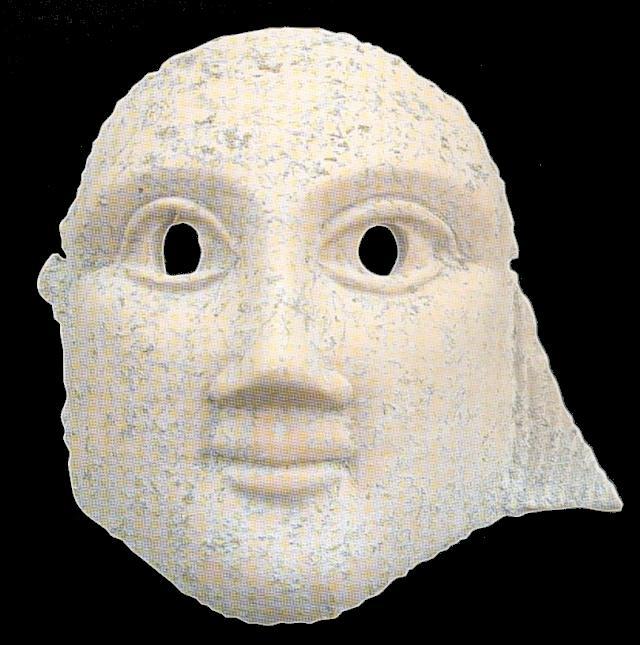
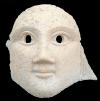
4 July 2008 - Discovery of tombsIn 2006, during archaeological investigations that preceded work bij the ACEA (a water and energy company), many funerary structures were found (mausolea, colombaria, and tombs "a cupa" and "a cappuccina"). The area is situated to the south-east of Ostia. Among the objects that were found are a terracotta mask that was placed on the face of the deceased, and a gold fillet for the hair-do of a woman. The excavators also found a long stretch of a road paved with basalt blocks, an internal road of the necropolis. The excavation has been published in the book "Necropoli Ostiensi", by Simona Pannuzi and others. It will be presented by the Superintendent of Ostia, Marina Sapelli Ragni, on July 4 2008 at 11 AM, in the Museo della Via Ostiense.
Narrow trenches were dug along the Via Ostiense / Via del Mare. A total of 71 inhumations and 5 cremations was found. Particularly interesting was the excavation of the body of a child, 4 to 5 years old. The head rested on a few bricks. On the face a terracotta mask had been placed. Another mask was found near the feet of the child. The masks may originally have been toys. A few inscriptions:
On a marble altar-ossuarium:
-----
-----
TR(omentina?)[---]AS
SEVIR AVGVST(alis)
IDEM Q(uin)Q(uennalis) ITEM
Q(uin)Q(uennalis) ORDINIS
AVGVSTALIVM
ET PATRONVS
CORP(oris) MENS(orum) FR(umentariorum)
OST(iensium) ADIVTOR
LAVRENS LAVIN(as)
COMPARAVIT SIBI
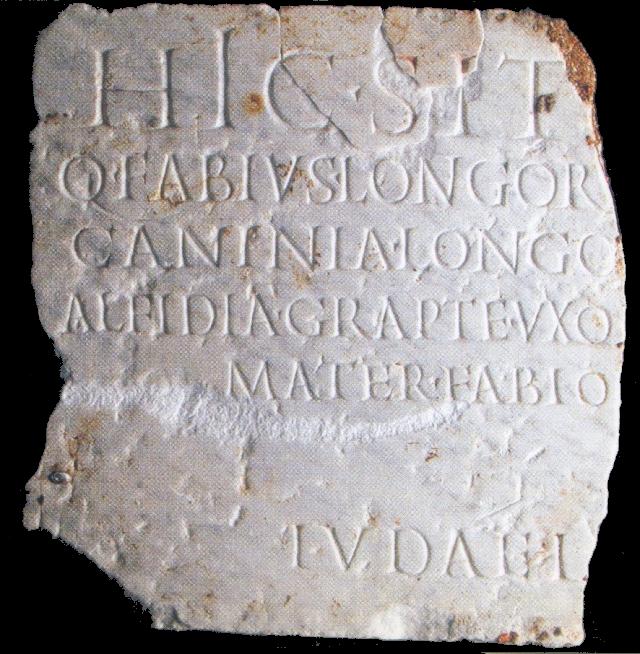
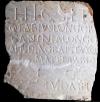
VIBVSOn a marble funerary slab, found a bit to the east of the Porta Laurentina necropolis (trenches SS 4-9):
HIC SIT[i sunt]
Q. FABIVS LONGORV[m l(ibertus) ---]
CANINIA LONGO[rum l(iberta) ---]
ALFIDIA GRAPTE UXOR [sua et]
MATER FABIO L[ongo f(ilio)]
IVDAEI[---]We seem to read about an anonymous man and woman, a freedman and a freedwoman of Q. Fabius Longus and Caninia Longa (his wife?). Alfidia Grapte was the wife of the freedman and mother of a son, Fabius Longus. We already know a Q. Fabius Longus who was duovir c. 25 AD, 31 AD and 37 AD (see the Fasti; Meiggs 192, 199, with more on possible relations with C. Fabii, one of them consul in 148 AD). All the people mentioned in the inscription seem to belong to the Jewish community of Ostia, witness the word Iudaei, also found in an inscription found in 1906 at Castel Porziano (AE 1907, 206; Universitas] Iud(a)eorum / [in col(onia) Ost(iensium) etc.).
Sources: www.adnkronos.com/IGN/Cultura, 26 June 2008; the book "Necropoli Ostiensi".
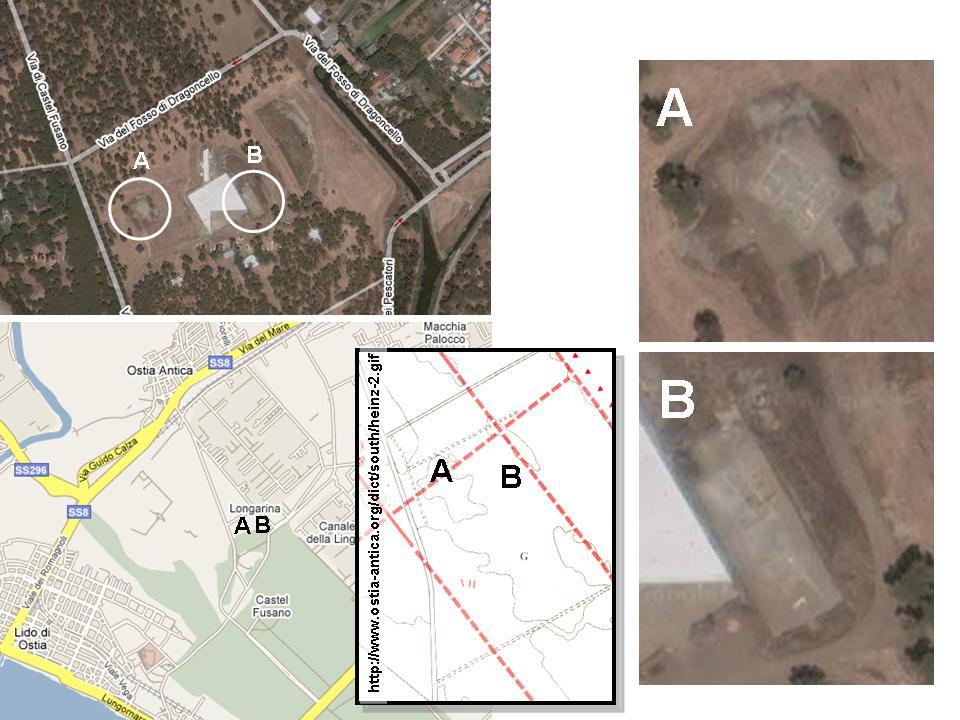
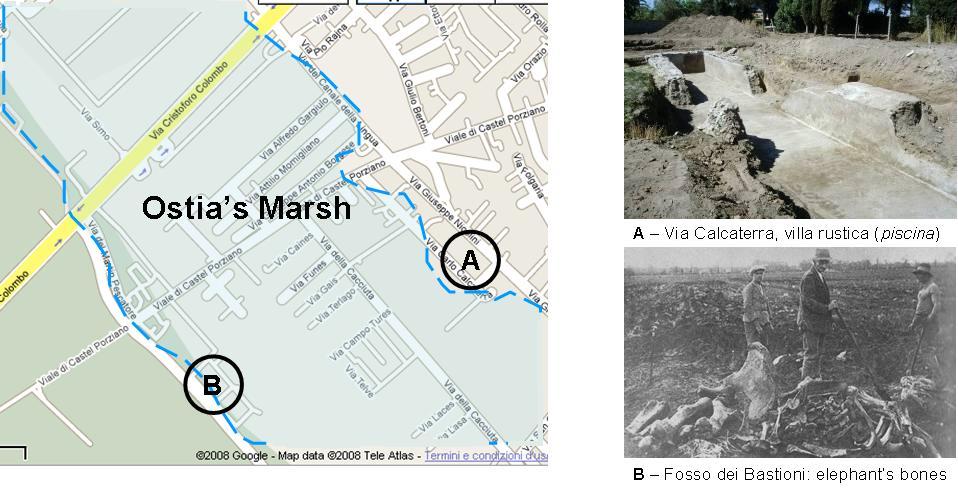
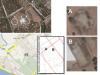
3 July 2008 - Discovery of a villa and a possible wharfInside Castel Fusano pine forest, Italian police blocked in April 2007 the building of a swimming pool and of a shopping centre. Near them were discovered a Roman villa rustica ("A" on the map) and another building, that might be a wharf of the ancient marsh of Ostia ("B" on the map). The area is included in the Capitol Camping, part of the Baia Holiday group. The discoveries have not yet been published.
Source: Andrea Schiavone.
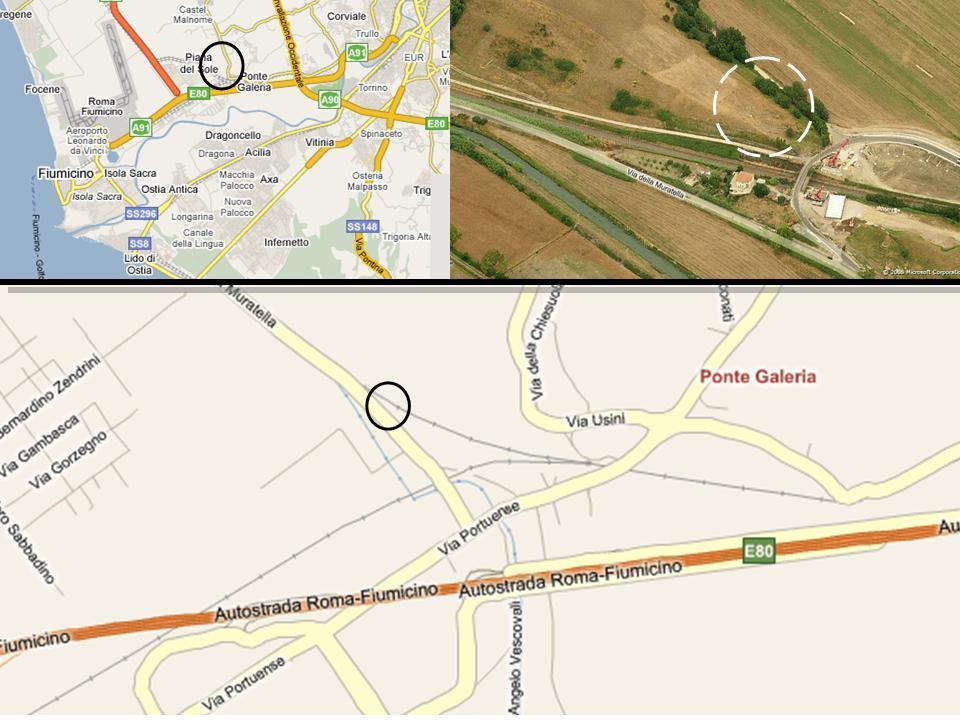
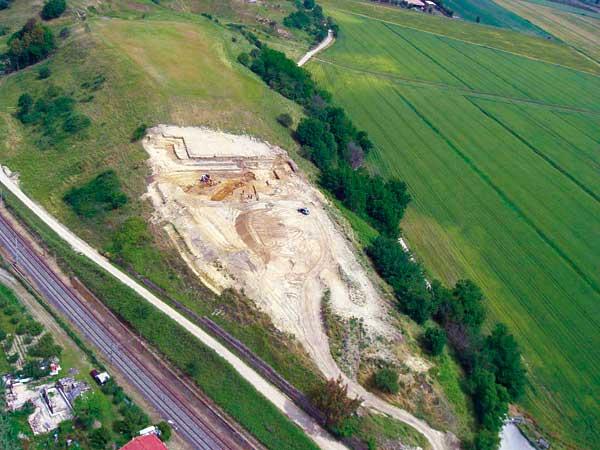
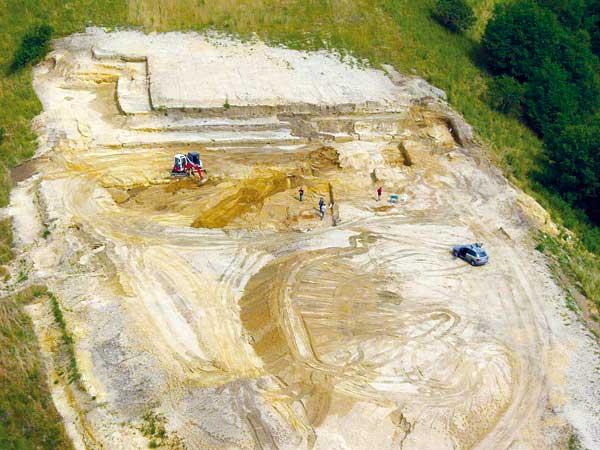
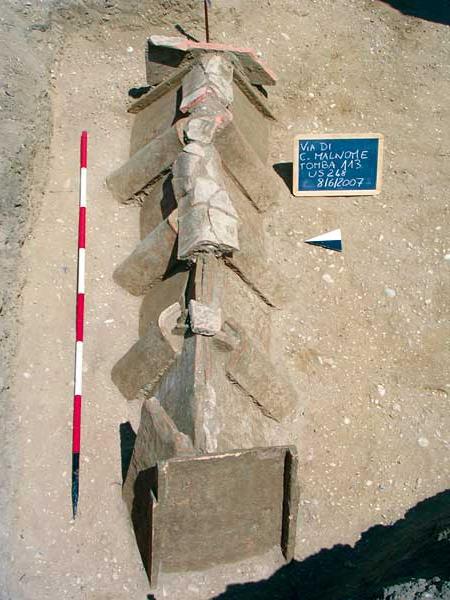
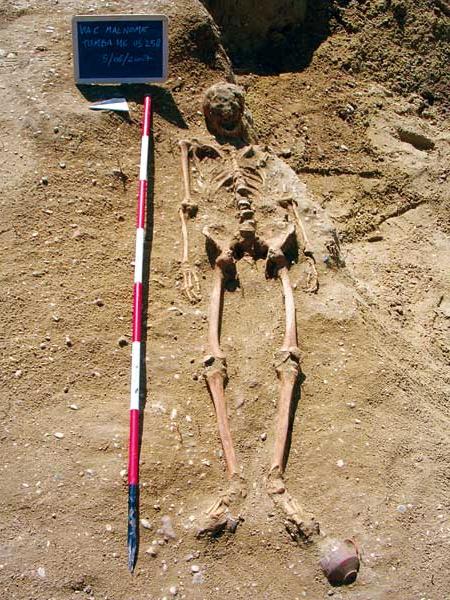
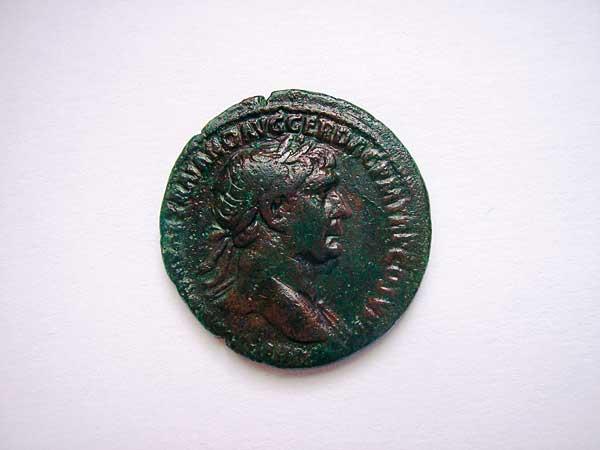
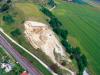
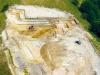
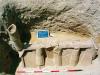
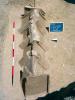
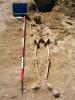
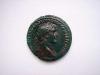
9 June 2008 - Excavations of a necropolis near PortusOn a hill to the east of Portus, at Ponte Galeria, 3000 square metres of a necropolis - the so-called Castel Malnone necropolis - have been excavated. Part of the necropolis is in the area for which the Superintendency of Ostia is responsible, the other part is under the jurisdiction of the Superintendency of Rome. In the necropolis the lower social classes buried their dead. The excavators found 320 tombs and around 270 skeletons. The bodies were buried in the first and second century AD, as can be deduced from some 70 coins, that were found placed in the mouths of the dead as offerings for underworld ferryman Charon.
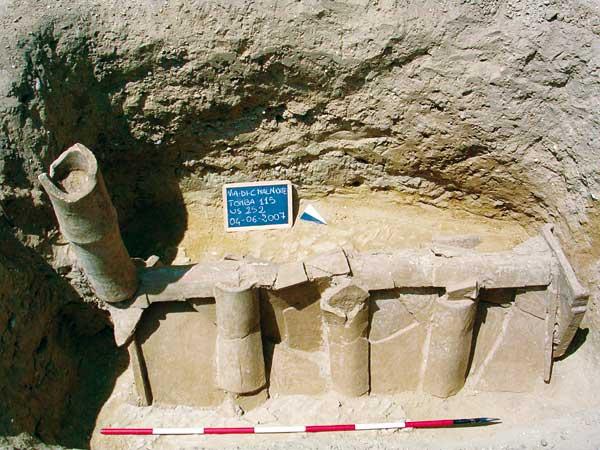
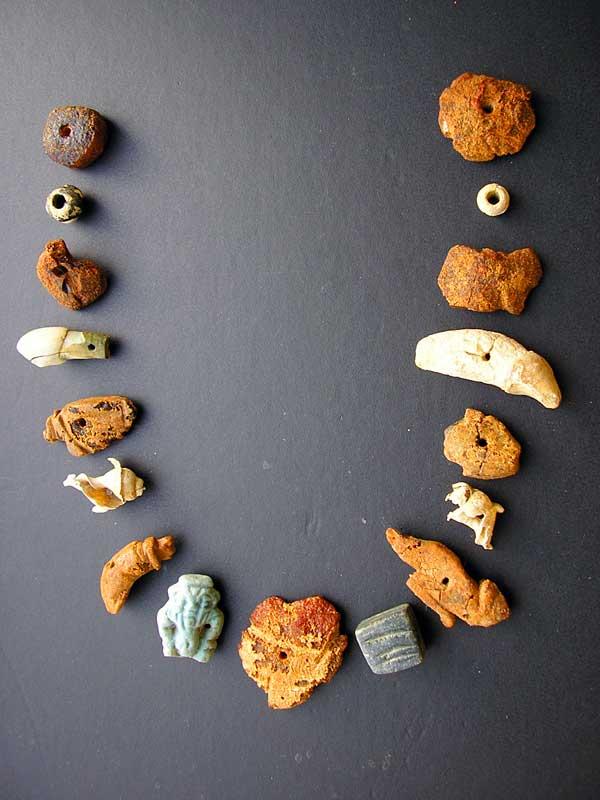
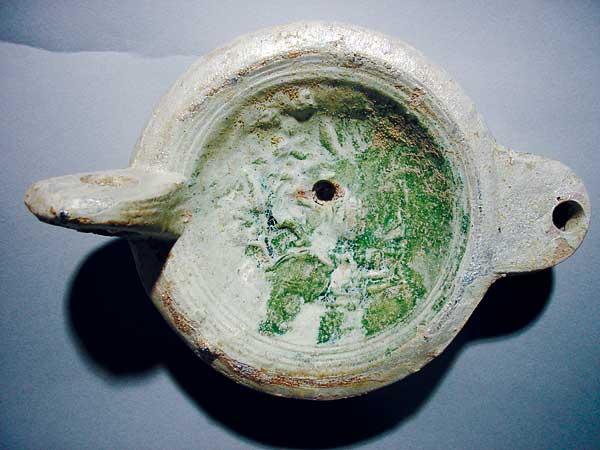
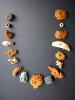
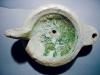
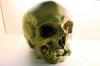
The tombs are simple trenches, covered by wood or by terracotta tiles ("a cappuccina"). Two urns were found. One in three of the burials comprised funerary gifts. Although most of the tombs contained only basic artefacts, the graves of two young boys led to more interesting finds. One boy, eight years old, held a necklace made from bones, shells and an amber pendant to protect him in the afterlife, while another was buried with two gold earrings and a large terracotta-and-glass oil lamp decorated with a scene from a grape harvest, a reference to the afterlife. Next to a woman a small mirror was found. Among the more intriguing finds were the remains of a full-grown man with a rare congenital disorder that would have made it impossible for him to open his mouth: his lower jaw was fused to his upper jaw. Study indicated how for all of his life this individual was fed, likely through the care of his family, with liquids or semisolids, introduced through a hole made through his teeth.
Anthropologists working at the site discovered that some 70% of the skeletons belonged to adult men between the ages of 20 and 40, and that many had joint and tendon inflammation, compressed vertebrae, hernias and spinal problems. Many ailments seem to hark back to work as labourers, in transport and carrying of heavy loads, in an especially humid environment. Experts believe the men may have worked in the nearby salt pans, where they were accustomed to carrying heavy sacks of salt on their shoulders, or carried heavy loads in Portus, perhaps also being involved in the construction work for the ports of the Emperors Claudius and Trajan. They may have been slaves. It is not known where they lived.
Archaeologists began excavating the site following a tip-off from police in March 2007. The art police had wondered about the existence of an archaeological site in the area after having arrested two local people for possession of ancient artefacts in the summer of 2006.
Sources: www.ansa.it, 9 June 2008; La Repubblica, 9 June 2008; news.yahoo.com, 9 June 2008; ap.google.com, 9 June 2008.
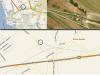
2 June 2008 - A new bridge over the TiberIntense building activity between Rome and Ostia, and near Leonardo da Vinci airport has led to major traffic problems (traffic jams). Several years ago the authorities decided to widen the bridge over the Tiber to the west of Ostia ("Ponte della Scafa"). This was forbidden by the Superintendency. The authorities now want to build a new bridge, 200 metres to the west.
Source: www.online-news.it/ostiaintasca/, 2 June 2008; infernetto.blogspot.com, 9 August 2007; www.ilgiornale.it, 9 August 2005.
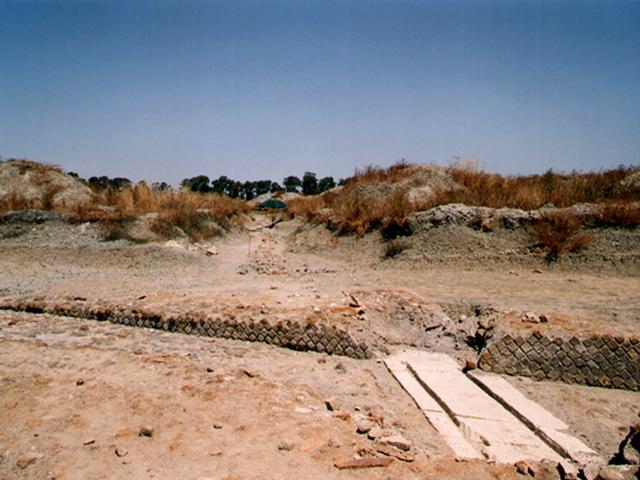
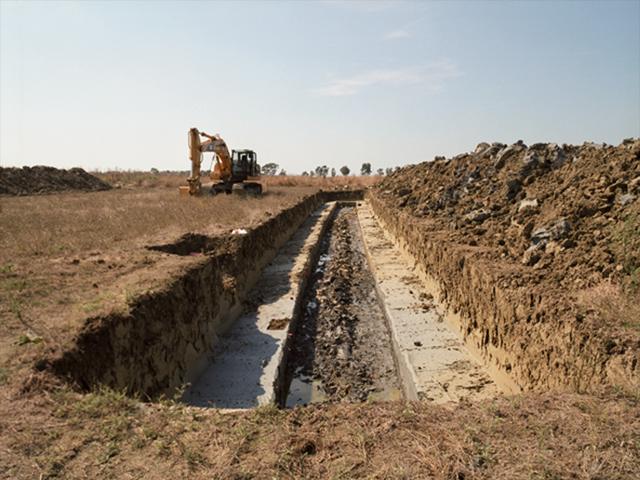
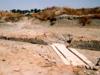
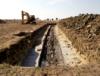
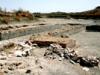
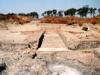
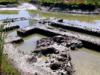
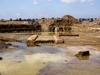
31 May 2008 - Excavations to the east of PortusApproximately four kilometres to the north-east of Portus a huge commercial complex will be built called Interporto Roma-Fiumicino. Therefore excavations started in 2001, that are still ongoing. Protohistoric and Roman remains were found. A Roman dike was found between the firm ground and the brackish lagune of Maccarese. It is lined by a row of more than 1170 amphorae, one kilometre long. Two masonry channels (opus reticulatum) at straight angles to the dike, controlled the discharge of the water. On the bottom of the channels are travertine slabs with holes in which partitions were fastened.
To the south, eight protohistoric sites were found, that have been dated to the late Bronze Age (1300-900 BC). In the same area hydraulic systems consisting of large and small channels were found, and many alignments of poles. These have been dated to various periods. The last phase has been dated to the sixth century AD. There is also a third masonry channel from the Roman period, when salt was produced here.
When the excavations are concluded the remains will be buried again. However, they will be reflected in the layout of the commercial complex.
Source: www.cirf.info.
14 May 2008 - An interview about the work for commercial archaeological companies near PortusMichele Tosto has interviewed an archaeologist about the work for commercial archaeological companies near Portus. The archaeologist wishes to remain anonymous. He or she has worked for Akhet Ltd. and LAND Ltd. Working hours are from 07.00 to 16.00, with a one-hour break. Excavations were carried out to the east of Portus, in an area where huge commercial centres are being built, such as the Fair of Rome ("Fiera di Roma"). Akhet pays a salary of 6 to 7 euro per hour, LAND of 100 euro gross per day. When it rains, the full salary is not paid. When a person is ill, he receives no salary. The work must be finished in a fixed number of days. Working overtime would not be paid. Insurances were paid for by Akhet, but not by LAND.
Source: www.rivistaonline.com, 14 May 2008.
18 April 2008 - New Superintendent of the excavations appointedProf. Marina Sapelli Ragni has been appointed as Superintendent of Ostia Antica. She has worked in Rome for 23 years, and for four years she was head of the Egyptian Museum in Turin. Her four main targets for Ostia and Portus are: stimulating tourism, improving the relations with universities and research institutes, synergy with local institutions, and good quality performances in the theatre during the summer. In 2007 Ostia was visited by 312.369 people, paying a total entrance fee of 774.640 euro.

Source: Il Messaggero, 18 April 2008.
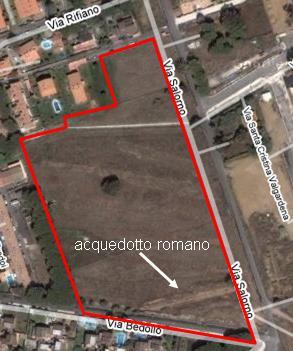
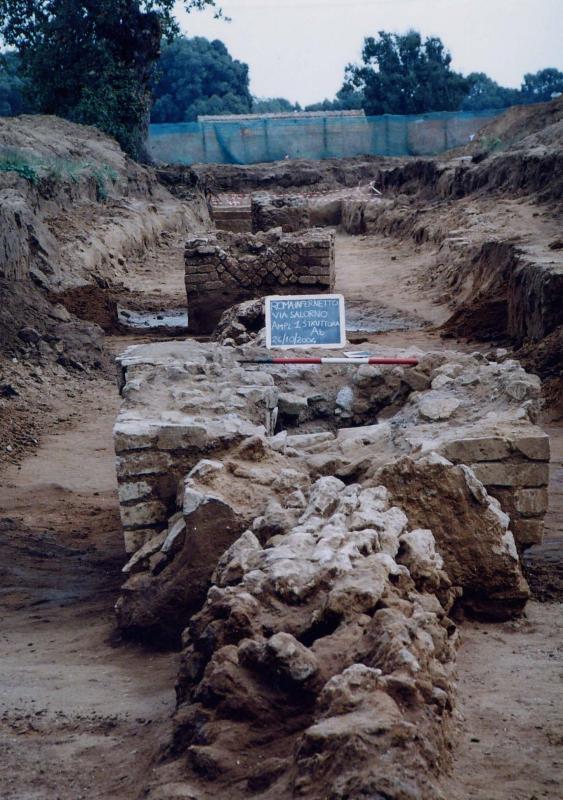
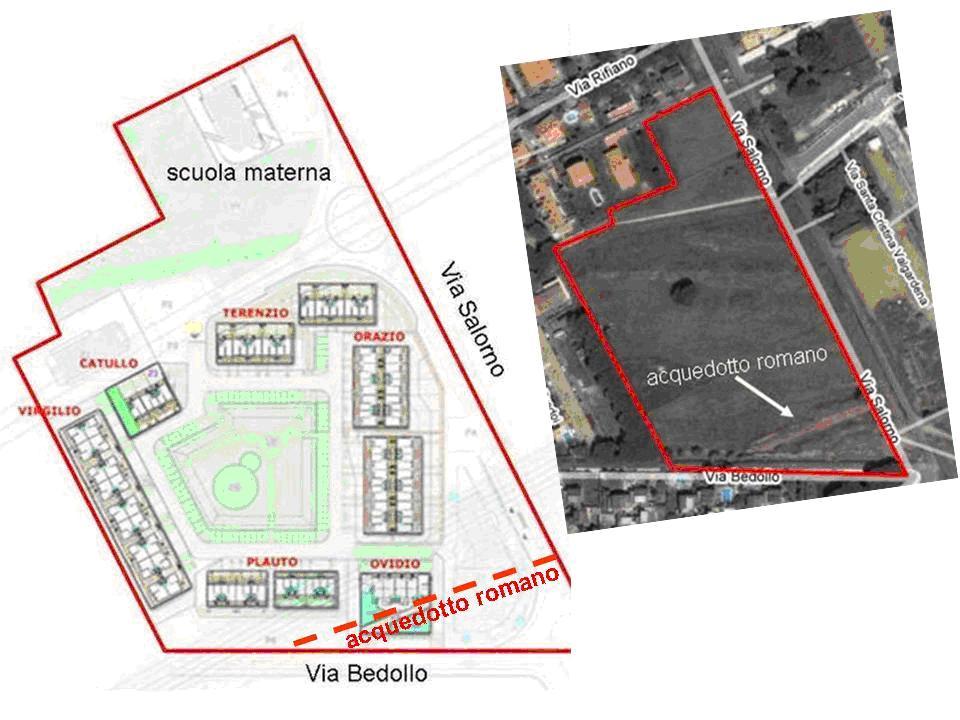
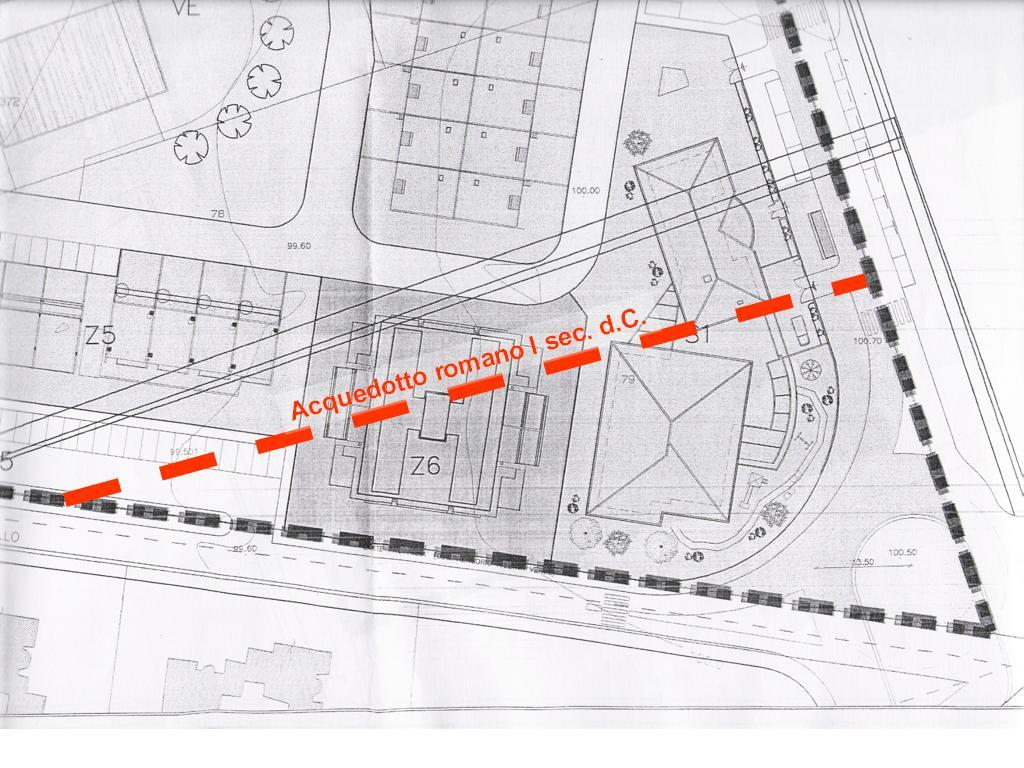
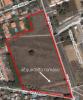
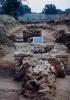
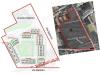
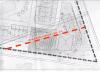
17 April 2008 - Plans for building over an aqueductThere are plans for building over a stretch of aqueduct 100 metres long, to the east of Ostia Antica, in a district called Infernetto (Via Bedollo). The aqueduct was found in the 1990's. It has been dated to the first century AD
Sources: www.online-news.it/ostiaintasca/blog, 17 April 2008; www.culturalazio.it, April 2008; www.castelporzianonews.it, April 2008; www.abitarearoma.net, 29 March 2008.
1 August 2007 - Intimidation of employees of the SuperintendencySeveral trade unions express their concerns about attempts to intimidate employees of the Superintendency. The tires of a car of one employee were punctured, another employee received an anonymous letter containing gunpowder and a bullet.
Source: http://www.fpcgilbac.tk.
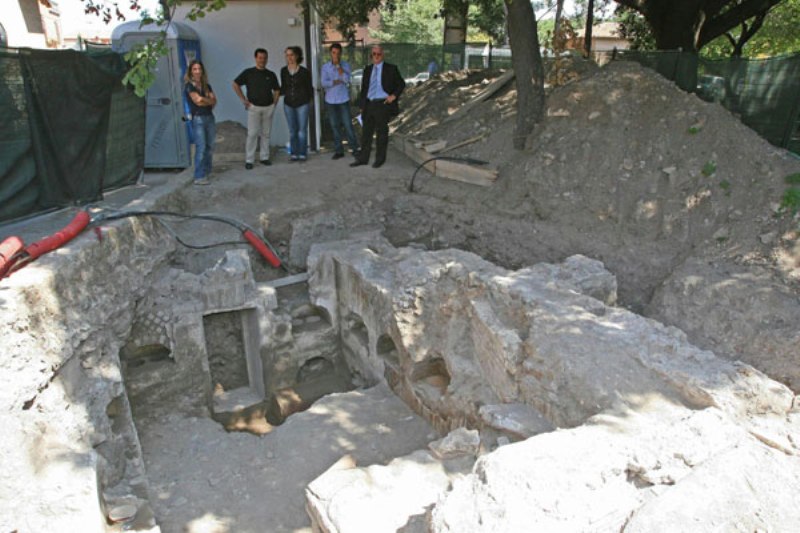
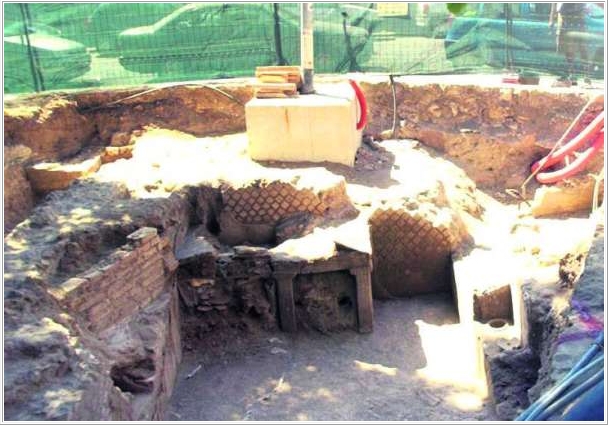
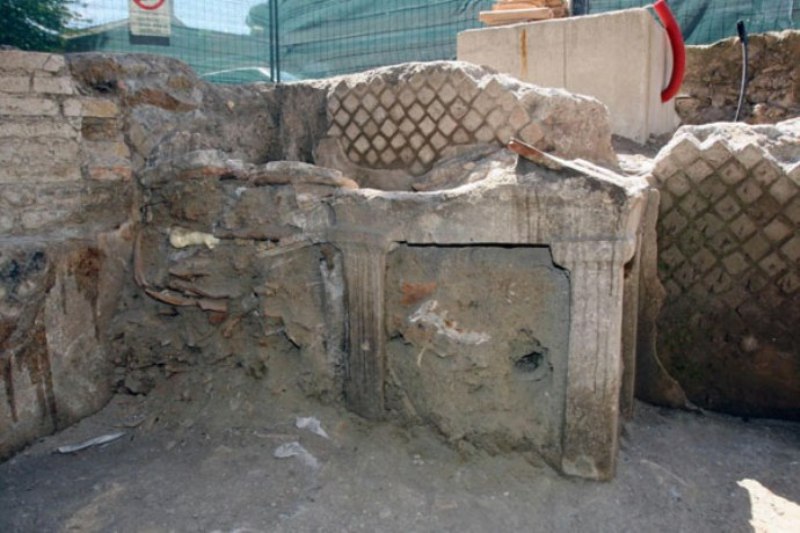
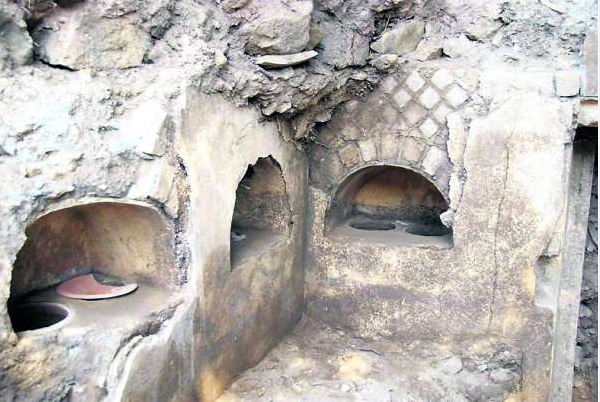
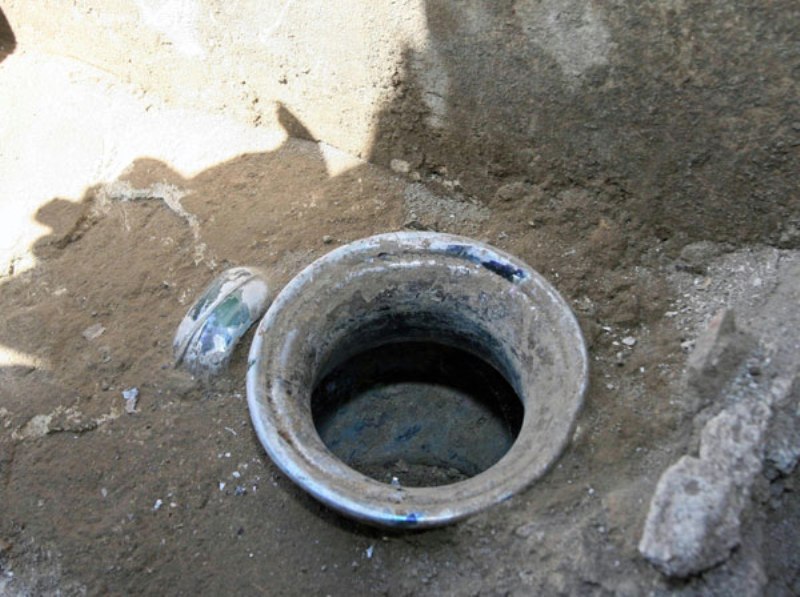
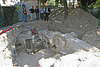
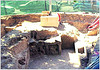
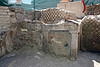
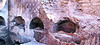
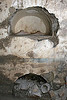
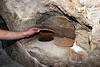
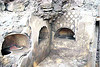
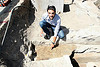
12 July 2007 - Discovery of a tomb in modern Ostia AnticaIn the Fall of 2006 a Roman tomb was found in modern Ostia Antica, during digging by the ACEA, a water and energy company. It was found not far from the Borgo and Castle, on Piazza Gregoriopoli between Ristorante Monumento and Bar Centro. It is a columbarium from the first century AD. It measures 8 x 6 metres. It is made of opus reticulatum and covered by a barrel vault. The main door is framed by travertine, and the iron hinges are still in place. In two aediculae niches with urns of terracotta and glass were found, still containing the ashes of the deceased. Also two skeletons were found, probably belonging to the second or third century. The latter were covered by a slab with a mosaic, and with the initials and age of one of the deceased (28 years). The floor is decorated with little pieces of marble, on the walls are remains of simple paintings. The tomb was covered in antiquity by mud, during a flood of the Tiber. Later it became a dump for amphorae in which oil had been taken to the harbour from Spain. After the excavation the site was covered with earth again. There are plans to cover it with a transparent roof.
Sources: La Repubblica, 12 July 2007; Il Messaggero, 12 July 2007.
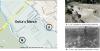
23 September 2006 - Animals for the amphitheatre near OstiaIn 1938 bones of an elephant were found to the south of Ostia, beyond the Canale dello Stagno. It is possible that in this area wild animals were kept, to be transported to the amphitheatre. In the area known as Infernetto may also have been a small harbour, where the animals were unloaded, near a swamp. In 1990 poles were found to which ships could be tied up. These remains were located by amateur archaeologists on private property. They were later destroyed by the owners. Recently a farm (villa rustica) was found here, near Via Nicolini and Via Calcaterra.
Sources: www.archeoweb.it, 23 September 2006; Il Messaggero, 23 September 2006; Andrea Schiavone.
22 April 2004 - Discovery of a stretch of the Via Portuensis near PortusIn June 2004 the building will start of a new Fair of Rome ("Fiera di Roma"), to the east of Portus and Leonardo da Vinci airport, covering an area of 200.000 square metres. Anna Gallina Zevi, Superintendent of Ostia, informs the press that important discoveries have been made recently nearby, especially a stretch of the ancient Via Portuensis, one kilometre long, without basalt blocks. In this area may also be remains of ancient factories and salt-works. "Let one thing be clear - she warns - We cannot bury history, everything that we will find will be respected and preserved.".
Sources: www.architettiroma.it; Il Messaggero, 22 April 2004.